This is another blog in the series ‘what my city means to me’. These posts offer a glimpse of the places and people that make up a city and are particularly interesting for readers in partner cities in other countries. In this blog I describe a place that has special meaning for me in Coventry.
My favourite place in Coventry is not one of the city landmarks the cathedral, the three spires or even the Godiva statue or clock. It is instead the memorial park.
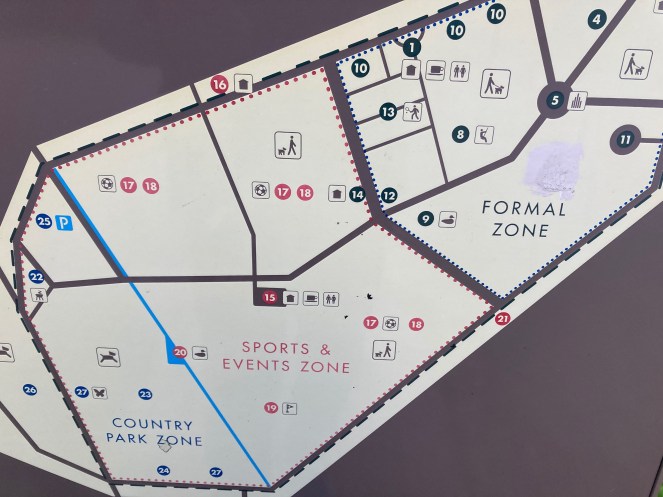
It’s a large park, about two and a half kilometres round if you take ‘the long route’. There are of course larger parks, and at least one in Coventry, but it is plenty big enough to get lost in. It is divided into sections or zones which tend to merge one into the other. The park attracts a broad mix of people: children, dog walkers, skateboarders, runners, mothers with small children, walkers, pitch and putters, tennis players and so on. In summer families and extended families bring picnics and talk while children play.
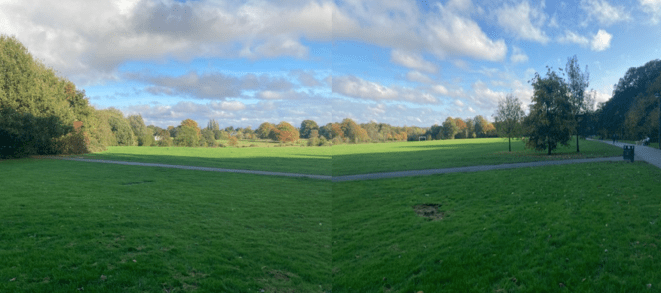
I was part of a running group there, I have also hosted an outdoor picnic for colleagues and students, and I have been to festivals and events. During lockdown, I walked there every evening when rules allowed. I now go there three or four times a week to have a coffee and sit down for a few minutes or watch a game of cricket or football or simply take in the view taking note of the changing seasons.
The park hosts events. Every Saturday there is a 5 kilometre park run. Often this attracts more than 700 runners and is one of the largest events of its kind in the country [1]. There are other one-off events such as orienteering, the Caribbean reggae festival, a food festival and an outdoor war remembrance on the Sunday on or nearest to the 11 November.

The biggest event held in the park is the three-day Godiva festival. This began in 1975 as a one-day event and has been run ever since in its longer format. Sadly, I cannot see as yet a programme for 2025 and fear it might not run due to crisis in council funding, but I will provide an update on this.
Why is it called the war memorial park? Well, previously the park was made up of fields, farmland and woodland until it was bought by the council and opened in 1921 in remembrance of soldiers from Coventry who lost their lives during the First World War. It was gradually landscaped over the years a process that was interrupted during the second world war when barrage balloons and anti-aircraft guns were placed in the park and large concrete blocks from this time can still be seen. To help with food supply fields were turned into allotments.
The idea of remembrance within the park is clearly signalled by the cenotaph and later through the planting of trees with plaques to honour the war dead.

The cenotaph was built in 1927 and is over 25 metres high. The cost was met by public donations – over £5,000 was raised and that would be £400,000 today. There was apparently a debate over whether the monument should be inscribed with the names of the war dead but in the end, a list or ‘roll of the fallen’ was put together and placed inside. On the day of the dedication of the memorial around 50,000 people turned up. This is remarkable given the population of Coventry at the time was around 150,000.
While the cenotaph has historic significance the memorial trees give me a better sense of lives cut short. Indeed, there are over 800 such trees in the park and if you want to investigate this further there is a display in the Visitor Centre called ‘The Missing Faces’ which has photos of over 200 people that match up with remembrance plaques by the side of the trees. [2]

Of course, summer is when the park gets its busiest and I am grateful then to have an open space near where I live. But it is not my favourite season for the grass becomes parched and trees look thirsty and I want to be by the sea. Instead, my favourite seasons for walking in the park, at least when it comes to seeing the trees is spring, when the park goes green, and autumn when the leaves change colour and shed their leaves. Of course, it looks quite a sight if we get a covering of snow in winter but I have generally had enough of the cold and dark by then.

Whatever season you choose there should be something in the park to interest or relax you.
[1] I describe the Parkruns in Dresden and Coventry in another blog on this site: ‘Parkrun in Dresden and Coventry’ [online] https://caifonline.com/2024/02/28/parkrun-in-dresden-and-coventry/
[2] There is a brief description and accompanying photo at: ‘Imperial War Museum Great War 100 The Missing Faces Wall’ [online] https://www.iwm.org.uk/memorials/item/memorial/87457
To find out more
If you want to read more then there is a Facebook page dedicated to the park, go to ‘War Memorial Park’ [online] https://www.facebook.com/warmemorialpk/
There is a helpful background to the park on the city council web pages, go to ‘War Memorial Park’ [online] https://www.coventry.gov.uk/wmp
And there is a friends page, go to ‘Friends of Memorial Park’ [online] http://www.fwmpcoventry.org.uk
There are some historic pictures of the park, go to ‘Historic Coventry’ [online]https://www.historiccoventry.co.uk/nowandthen/content.php?pg=war-mem-park
There is also a reflection on the park produced by history students at Coventry University: Samantha Marston, Luke Ellis, Emma Shields and Owen Foster. Go to ‘Coventry War Memorial Park: A War Memorial for a Democratic City’ [online] https://coventrywarmemorial.wordpress.com/
The above site contains an interview with Coventry historian, Trevor Harkin who has written extensively on both the memorial park and on Coventry in general. A selection of his books is available online at various booksellers, for example at Waterstones [online] https://www.waterstones.com/books/search/term/harkin+trevor

 Coventry Association for International Friendship