CAIF was very pleased to host Patrick Wilden a writer and poet from Dresden, here he reflects on his visit.
When I decided to go to Coventry, I had to cope with the fact that I didn’t possess a valid passport, which is yet inevitable to cross the threshold to the UK since so-called Brexit. We people from the continent are somewhat blauäugig in the sense of naïve in this respect, for we all have ID cards that don’t exist in Britain but are sufficient for EU countries, and only those travelling frequently abroad have passports. ‘You will get nowhere without borders,’ as I had read in a poem by Slovenian poet Aleš Šteger. Now I had to admit it as I had myself written a poem on this behalf making use of this quotation.
In the end I arrived at Birmingham Airport without any difficulties on April Fool’s Day, and if there was anything trying to make a fool of me, it was surely the check-in automat that didn’t accept my brand-new passport, so I had to pass by the officials and—was welcomed in German! (This happened to me in Coventry too, especially when I said I was from Dresden.) Monika and Nikolai, my facilitators and most important organisers of the Writers’ Exchange, were so kind as to pick me up at the airport. Outside, when we went to the carpark, I suddenly remembered what had happened to poor Rolf Dieter Brinkmann, a German poet who died in 1975 on a short trip to London ignoring left-hand traffic.
Everything went fine though in this matter, we safely got to Earlsdon where I met Lynne and, later on, Peter, her neighbour with whom I stayed during my week in Cov. Among many other occupations, Lynne is involved in the German Circle (CGC) speaking the language very well. Peter, who used to be a technician, seemed very interested in my poems, even though he doesn’t speak German, and we used to have long and intense conversations über Gott und die Welt, about anything and everything when I had an evening off (which wasn’t too often). More than once we were still sitting at the breakfast table talking when I had to leave for a date in the morning. I still feel embarrassed when I think of Ann and Tracy waiting for me in their car in front of Peter’s house to go with them for a trip to Kenilworth Castle because Peter and I hatten uns verquatscht, forgetting the time.
After lunch with my lovely hosts, it was Lynne who took me into town that day, so I could catch a first glimpse of Dresden Place and Bull Yard, the Precinct and Lady Godiva statue, just to feed my imagination. In the evening, I stayed with Janet and Alan, friends of Monika’s and very friendly people. We talked a lot and I didn’t mind being ‘plunged into cold water’ of English conversation as the two gave their best to make me forget the long journey. Alan is a brewer, so I got a good taste of Twisted Barrel beer which I enjoyed very much. Good to know that I had come to a place where there is always good stuff to drink.
*
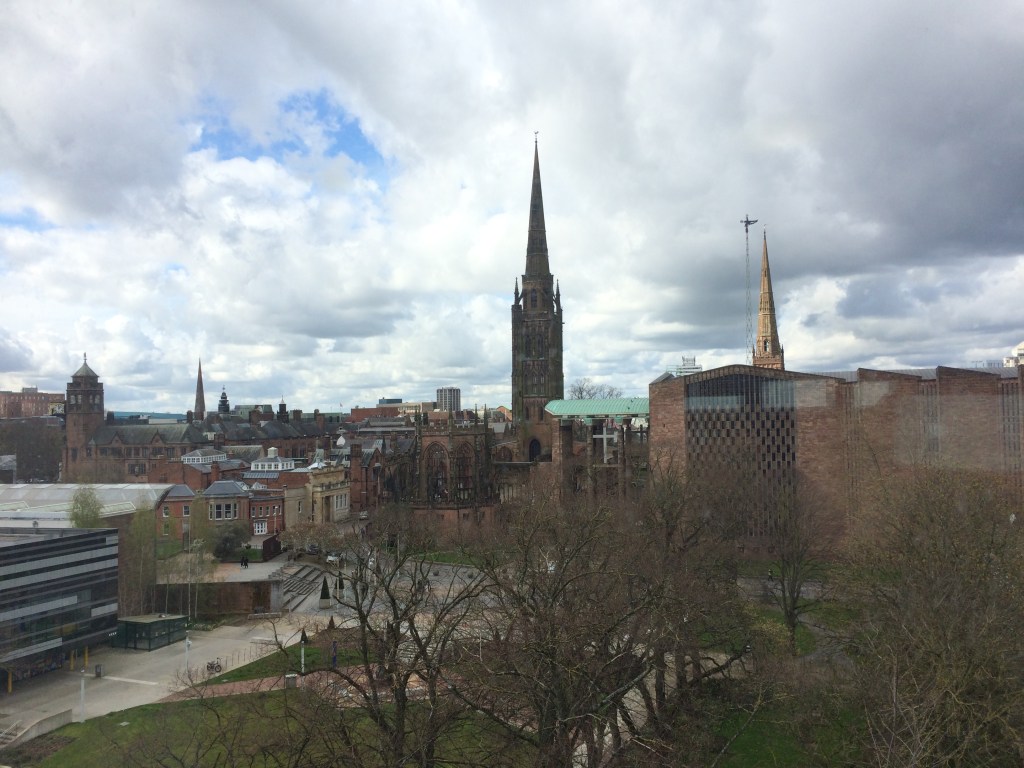
My first mission as a writer the next day (Tuesday, 2 April) was to give a creative writing class with Lyle at Coventry University. Monika and Nikolai were with us. The idea was to read some of my poems in German and English and to let the students write their own poems afterwards. But either the idea was too sophisticated or the students were too shy, we ended up just talking a lot about our two countries, the impact of words and how it is to ‘make’ literature. ‘When did it start?’ I was asked and I’m still formulating a reply.
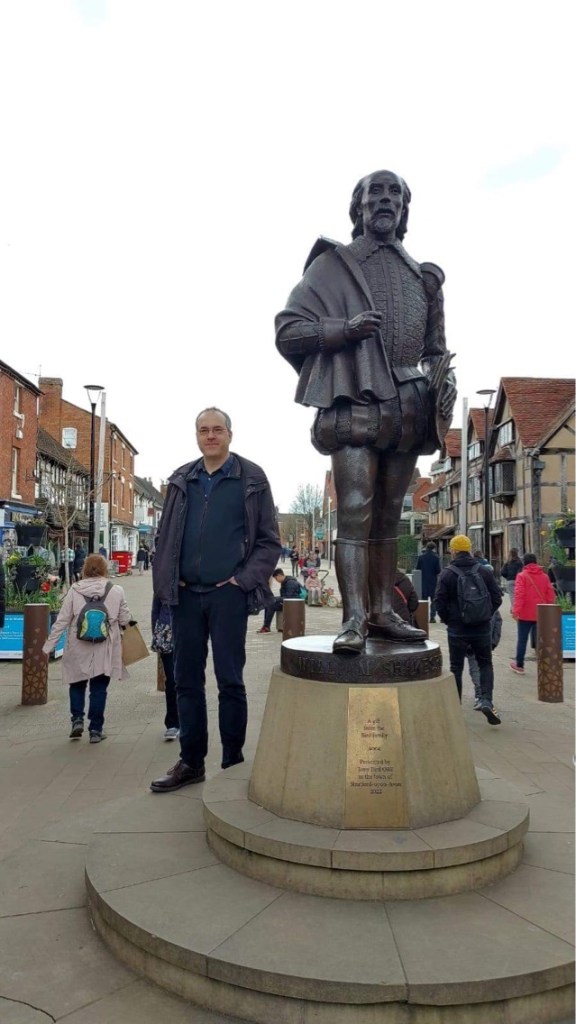
In the afternoon, Monika and Nikolai took me to Stratford-upon-Avon—for a certain reason the heart of it all. We were primarily interested in our well-being in a café, but I realised after all that Shakespeare’s shoes had a bigger size than mine although I’m trying to keep pace. We also visited the church where he is buried, having a little stroll along the riverbank of the Avon, and from the theatre’s lookout tower we saw the Cotswold Hills in Gloucestershire in the distance. We were having an ice cream when it started raining again.
In the evening, Monika and I were invited to the regular meeting of Coventry Writers’ Group. There I saw Ann again, the poet who came to Dresden in 2023, and met Navkiran who is supposed to be the next exchange poet in September 2024. We were very warmly welcomed by Margaret and since I knew that the evening’s writing theme would be ‘Fool’, I had myself written a little ‘foolish’ poem in ‘pseudo-English’ on this occasion when I was on the plane:
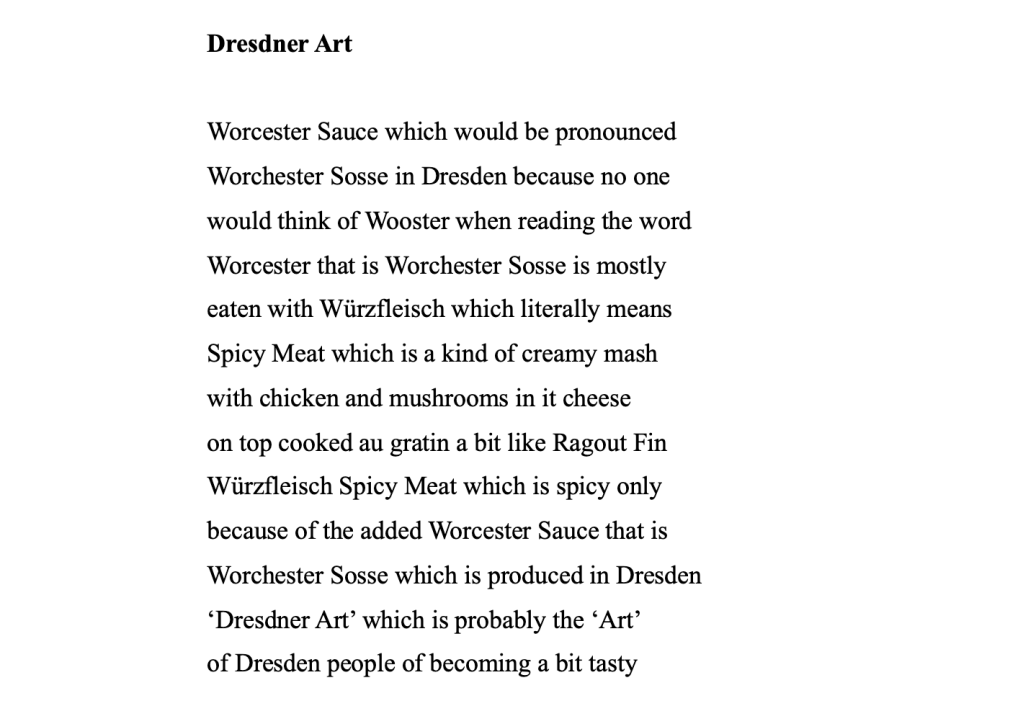
The mysteries of English spelling and correct pronunciation at least caused a good laugh. Since I had wisely taken a small bottle of Worcester Sauce ‘Dresdner Art’ for demonstration purposes with me, Ann gladly agreed to take it as a present and promised to give me ‘an original one’ in return.
*
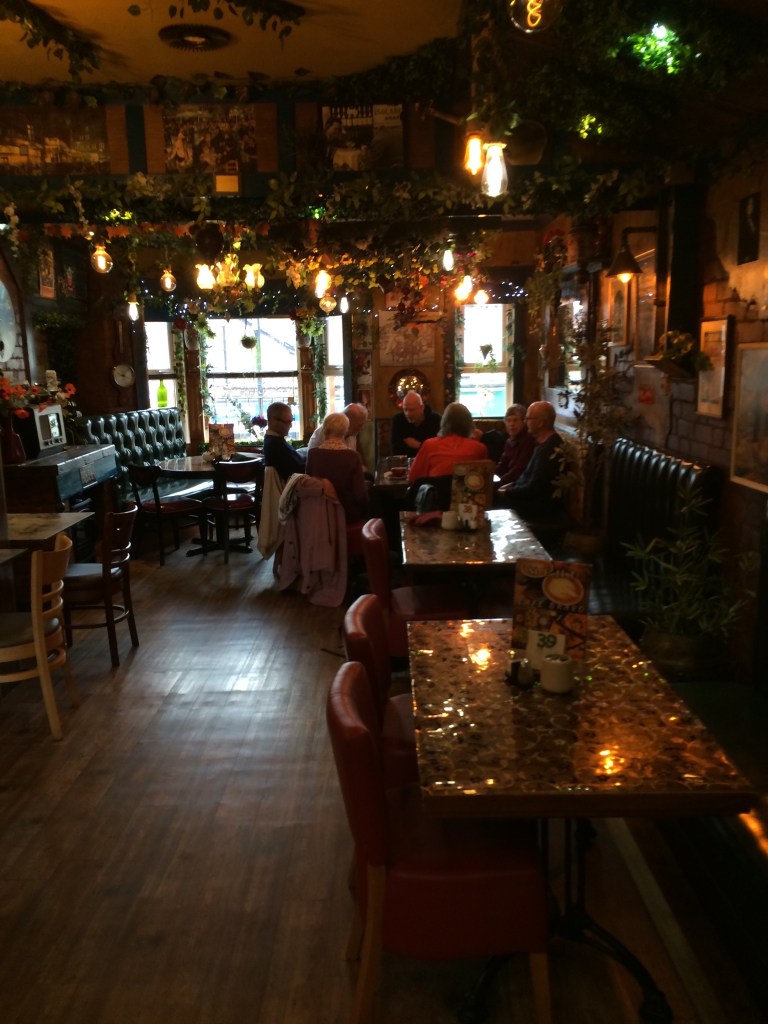
Wednesday morning, on my third day in Coventry, we had a nice breakfast in Earlsdon, with everything in it including black pudding, and I saw again many members of the Dresden delegation whom I had met in February. From there, Emilie took me to Hillz FM radio station.
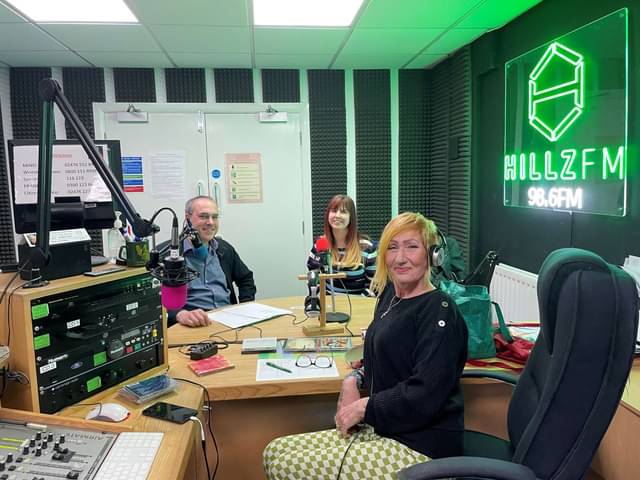
The first thing I perceived when entering the studio was a big sign ‘No Swearing’. It was easy to follow this instruction because Kate of Hillz FM was so lovely and I was so busy answering her questions in comprehensible English that I definitely wasn’t able to think of four-letter-words. I read a couple of poems—and I must now express my gratitude to Rainer in Dresden who had so carefully and professionally translated my texts! However, as I had anticipated the question of when my relationship with the UK began, I had prepared another ‘pseudo-English’ text on the subject as a possible answer:
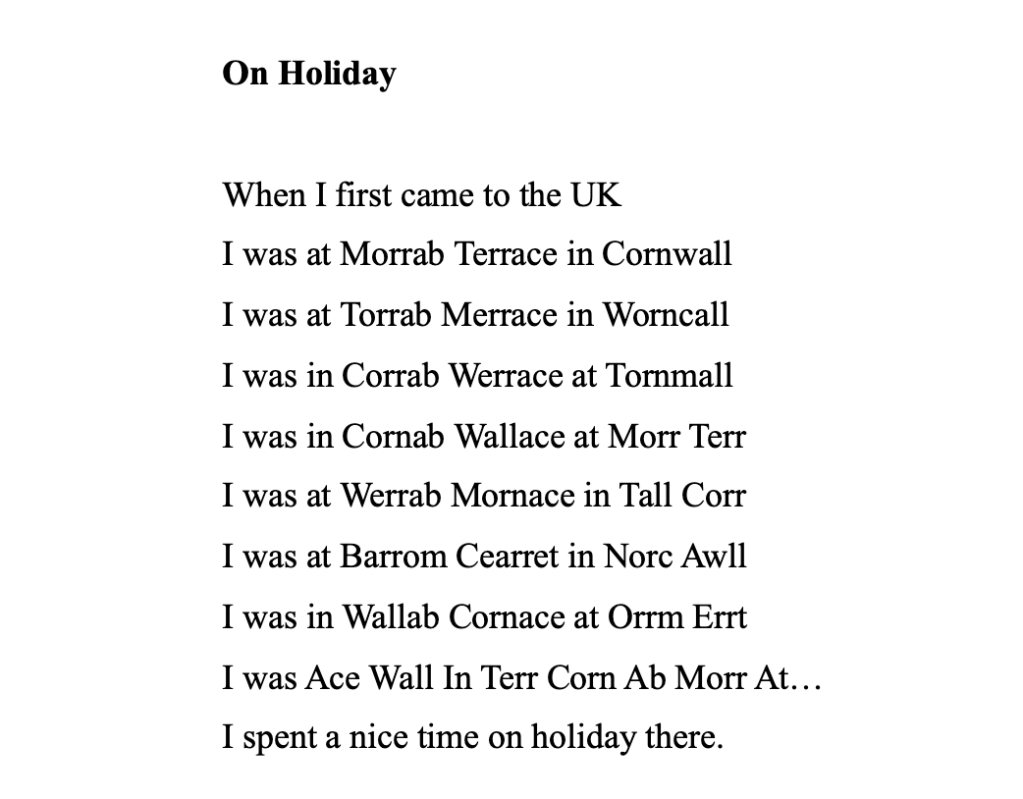
I spent a nice time on holiday there.
It’s time to be serious now for what followed then was a guided tour through the city centre and, of course, to St Michael’s Cathedral, and I must say I was impressed.
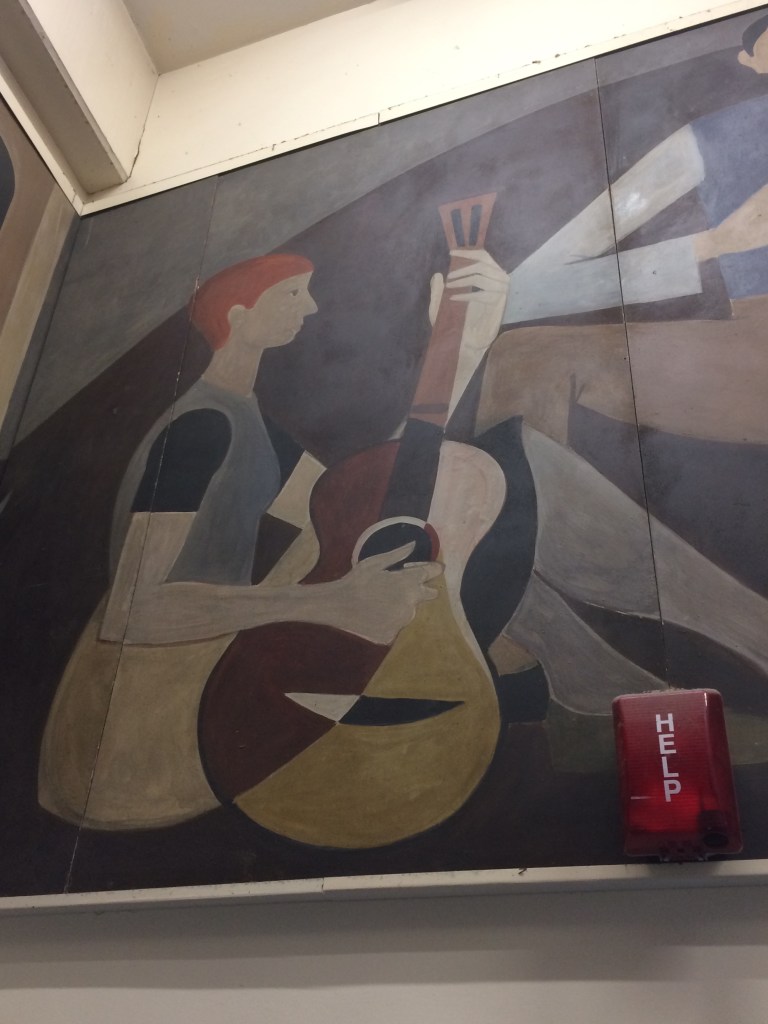
Although Dresden and Coventry knew similar devastations in World War II, the reconstruction pattern differs due to the unlike political systems and economical possibilities. Walking along Precinct which is supposed to be the first pedestrian area in Europe, I was thinking of the first German one at Treppenstrasse in Kassel, the city next to which I grew up and which was heavily destroyed in the war as well.
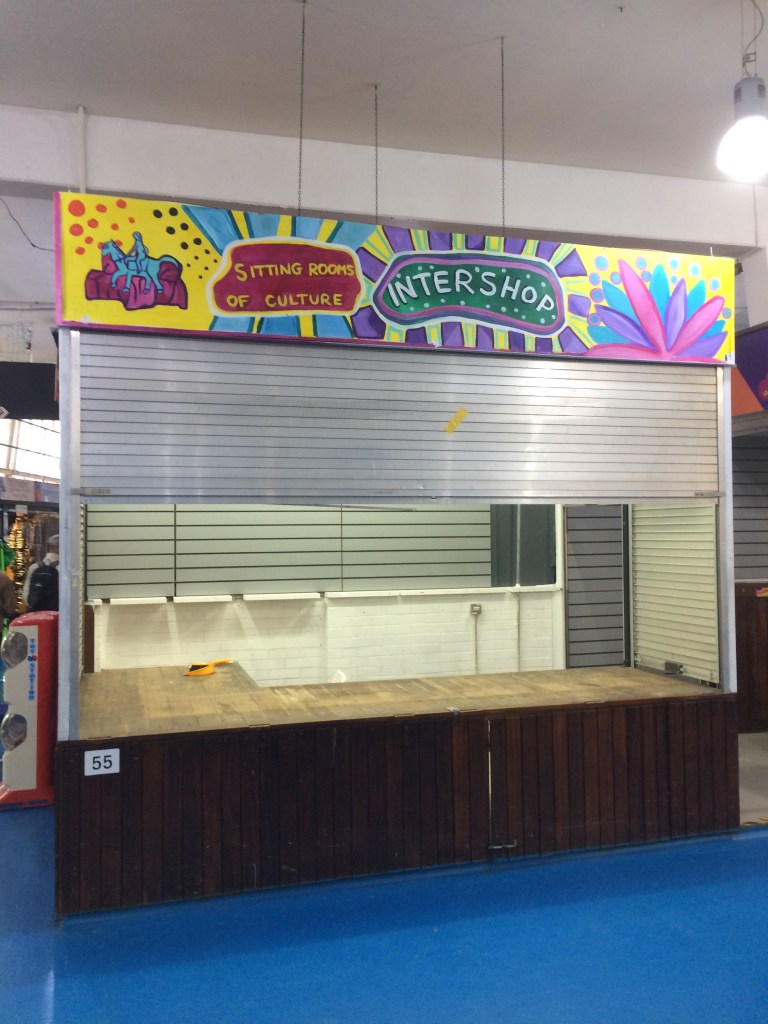
I liked Coventry Market with its colourful stalls and of course the mural, almost forgotten nowadays, its counterpart still to be seen at Dresden Kulturpalast.
I also learned about the plans to knock down large parts of the area around Bull Yard and to rebuild it in a contemporary style, which in my opinion doesn’t bode well. Knowing that Litten Tree Building which has developed into a cultural hotspot, will be demolished, this seems scandalous to me.
When we went to Dresden Place opposite to it to read the memorial plaque, we suddenly realised that we had come exactly on the 50th anniversary of its inauguration, on 3rd of April 1974. And surely the cathedral moved me, the sheer ruin corresponding so perfectly with the severity and lightness of the modern building, with the sculpture of St Michael attached to the façade watching over it without making use of his spear. Richard from German Circle, who works as a cathedral guide and speaks excellent German, knew all about it. Afterwards, we could only come to terms with so many impressions at the Old Windmill, having a pie and a pint of Old Peculier.
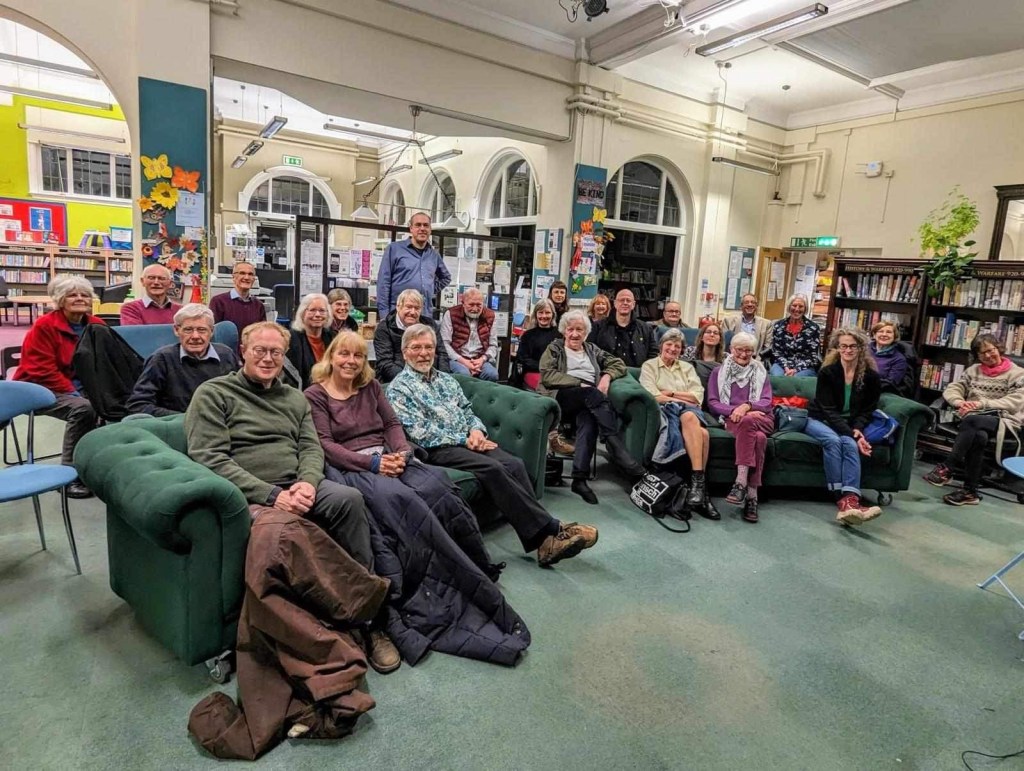
But there was still my lecture at the German Circle at Earlsdon Library to come. I should speak German clearly and not too quickly I was told before. As the projection of my texts didn’t work, I had to improvise which turned out to be more fun for the audience and for me too. Although I hadn’t prepared it, we also discussed the Austrian poet Ernst Jandl and Dresden born Erich Kästner who had had his 125th birthday some weeks before, and my opinion that Kästner loses his typically German wit in translation was widely confirmed. I had brought some copies of my books and had none left in the end which made me happy.
*
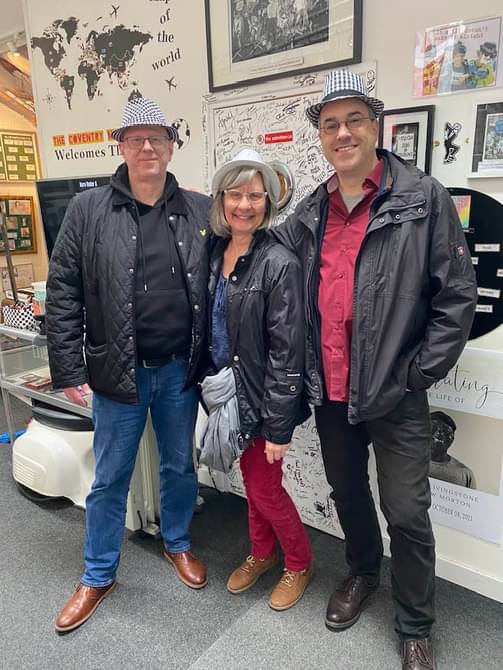
Yes, it was a busy week but I really enjoyed it. Particularly the desire of so many people involved to show me as much as possible of Coventry’s characteristics overwhelmed me. On Thursday, the fourth day of my visit, Monika and Nikolai again popped in when Peter and I were still having our croissants, chatting at the breakfast table. They took me to the Music Museum and I learned a lot about Two-Tone and the clash of the early 1980s. Head of CAIF Ram Lakha, although very busy with the elections at that time, joined us when we were just taking photographs wearing silly hats. The more serious part of cultural programme took place at St Mary’s Guildhall next to the cathedral which miraculously had survived war time. I met Cleo, Emilie’s eight months old daughter, for the first time and she already seemed to know much more about English history than me as she was very well-behaved the whole afternoon.
That evening I was supposed to be the special guest in the line-up of Fire&Dust poetry slam at the LTB Showrooms. Before we met to have dinner together with some other poets, I did a little walk along Broadgate and the Precinct. It occurred to me that the city was actually too small for so many shopping-malls and multi-storey buildings of the postwar era. Which makes the remnants of the old town, discreetly waiting in the shadow of modernity, even more precious.
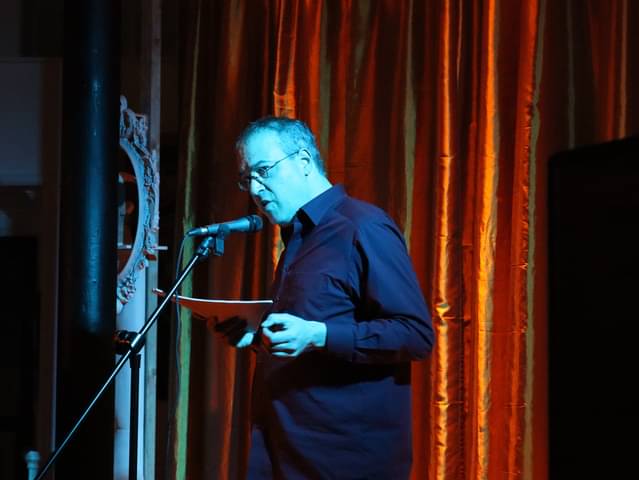
Dinner with the poets was nice, I met Ann and Raef who run Fire&Dust, Navkiran was there, I met Tracy and Leah. Monika went with us to Litten Tree Building, Nikolai couldn’t come because he had to work early the next day. Jan and Alan were there too. Alan had brought some cans of his best beers and I had the pleasure to taste it. Normally I’m not very much into poetry slam but the concept is brilliant because with so many poets in it, you will always have an attentive audience. I had a great evening at Fire&Dust although I was pretty excited. I was a bit anxious about reading my poem ‘Patriotism’ to an English public, in which one is playing with toy soldiers and the last two verses read ‘I was The Germans / The Germans lost’.
I also enjoyed the readings, there was a lot of spoken word and rap sound in it, making frequently use of rhyme. More than half of the line-up were debuts, a young woman had created her own congratulation poem for her 17th birthday, a man had just found the last line to a poem after searching for it for decades. Alison Manning read ‘Poets’ Hour at Aldi’ and ‘Anarchy Bridge’ which I appreciated very much. Andrea Mbarushimana recited a poem about an old bomber pilot whom she had interviewed once. I had nice talks afterwards and got good feedback for my presentation, and when I walked to Earlsdon via Spencer Park, I suddenly recognised the wet carpark next to Aldi below me. I was standing on ‘anarchy bridge’ as I had just learned.
*
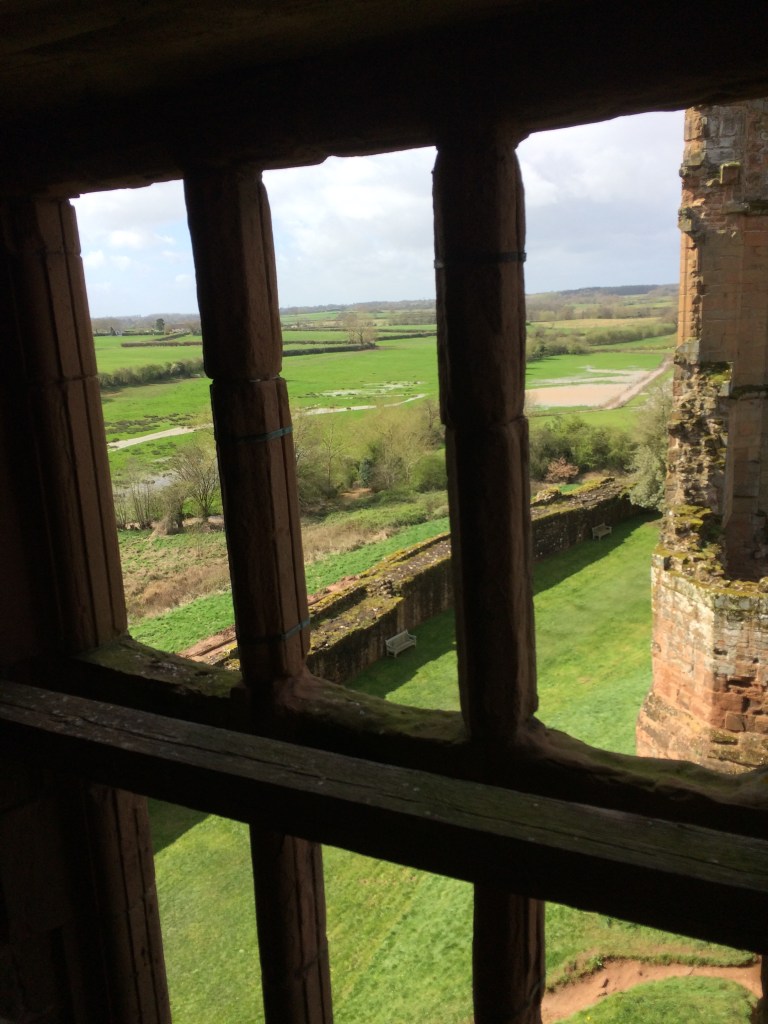
The next day I went to Kenilworth Castle with Ann and Tracy and also Kizzy, their charming whippet lurcher. Those British Heritage or National Trust sites are quite popular among dog owners and of course everyone except me has a membership card. The impressive ruin dates from Norman times but its best-preserved wing was built in the Elizabethan era when, as I later noted down, Ritter Schrobert Dudeldei of Knödlwürz Kasel tried to romance Queenelisebess Diersteduring her two-week visit to the premises. Naturally, she refused to marry him—and writing this, I remember a professor at Tübingen University who once said to me: ‘The word naturally doesn’t exist for a historian.’ On our way back I mentioned that I had missed a decent bookshop inside Coventry, and if Ann hadn’t had to go for a treatment, we would have probably made a little detour to Astley Book Farm nearby.
In the afternoon I met Emilie and Navkiran in an off-licence shop at Earlsdon where they also offer drinks and little posh meals. From a sober panel of taps at the wall they poured the most exquisite and exotic craft beers, it was a bit like Dr Faustus knocking at the wall and making the wine come out of it. I had a long and emotional discussion with Navkiran over death an making it a poetical subject, even making fun of it and whether poems also could be considered as prayers. I told Navkiran for whom religion is quite important, of Dresden-based poet Uwe Kolbe who grew up in the secular GDR und now writes psalms.
Later I had one of my wonderful conversational evenings with Peter and wir kamen vom Hundertsten ins Tausendste, thus we were carried away by more and more points of interest and I got the impression that the more sophisticated our conversation became the more my English turned into a babble. It was fun though, Lynne joined us for a while and Peter also showed me Edward Thomas’ famous poem Adlestrop, of which I later tried to make a German version: Und einen Moment lang sang eine Amsel… (‘And for that minute a blackbird sang’…)
*
Saturday was a bright day. It was warm and it didn’t rain at all and everyone appreciated it. In the afternoon, we sat outside of Gatehouse Tavern in a so-called ‘beer garden’ having a pint. How had I got there? It began with breakfast at Cosy Club with Monika and many others. I met Zsófia from German Circle again, she is Hungarian, lived in Austria for a while and speaks German very well. Mandip the photographer was there, Steve who had been professor at Warwick University. I met Linda and Dave who told me that they were soon going to Meschede, another twin city of Coventry, and I forgot to mention that my grandpa grew up some twenty kilometres from there. Dave also asked me one of these questions, namely how did I think people in Dresden want their city to be remembered. I told him that in my opinion, Dresden people love to go back to what they consider to be baroque times, supposedly the Golden Age of Saxony in the eighteenth century, although Dresden later became an industrial city just like Coventry. And of course, many legacies of socialist times are still waiting to be dealt with.
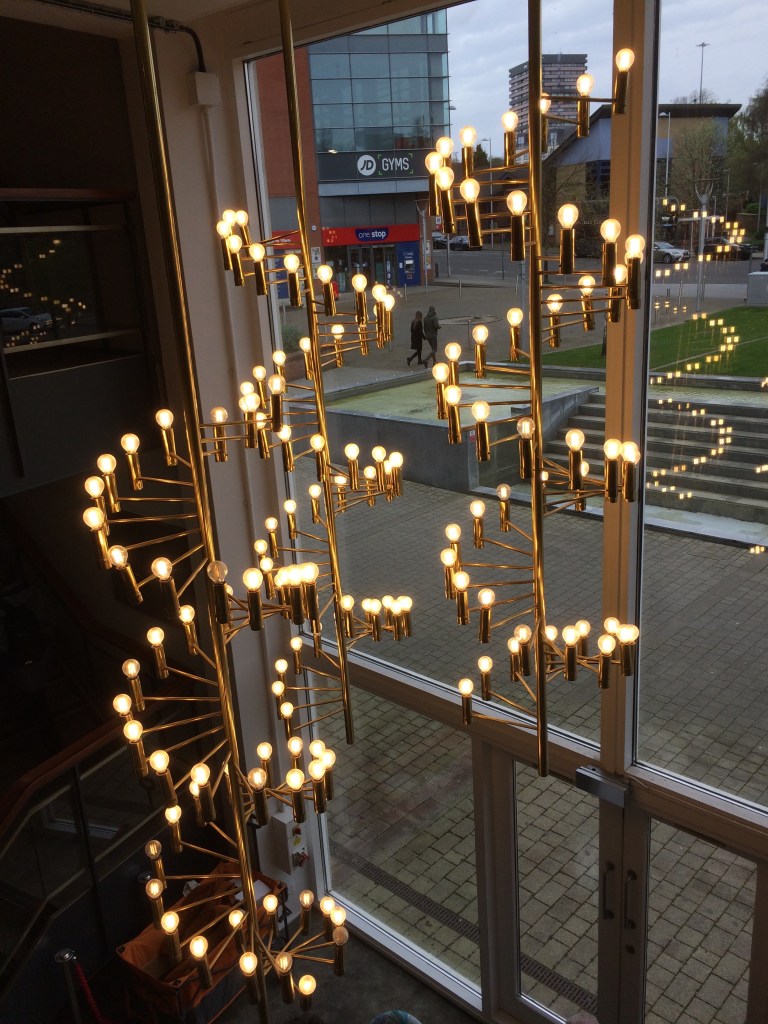
But there still was the Book Extravaganza at Belgrade Theatre to come, a beautiful venue reminding me of the Leipzig opera house with its façade and chandeliers from the 1960s. I didn’t see the hall though, as the presentation of writers, publishers and all kinds of book-loving initiatives took place in the lobby. I was kindly invited to be part of a panel where Coventry’s two current Poet Laureates, a disabled writer and two children launching their first books, introduced themselves.
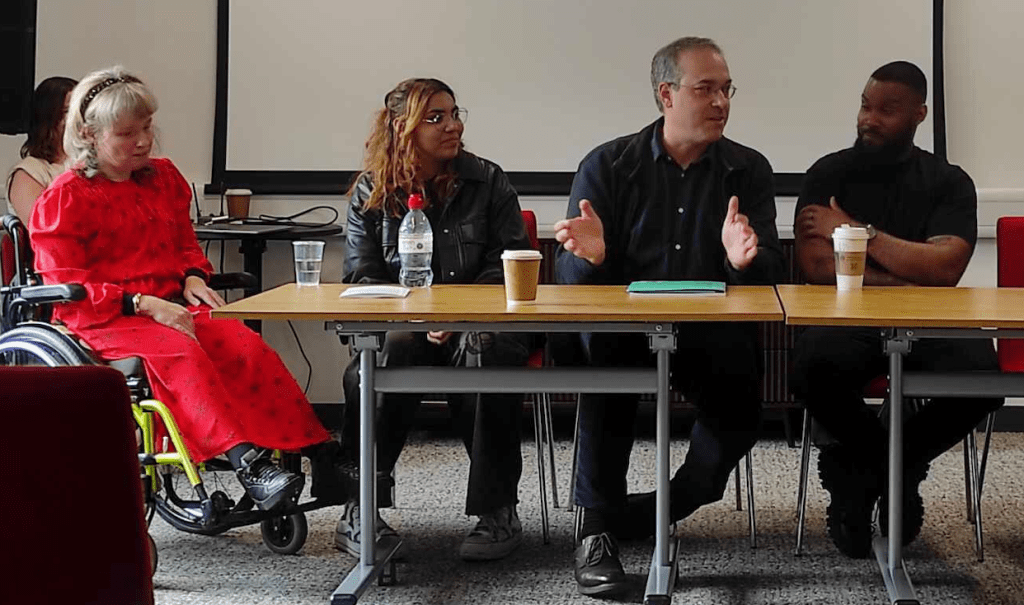
It was probably the most official meeting I had during my week in England. But once more, I was impressed by the self-evident importance given to poetry in this country. I liked John reciting from memory his verses which were very political and seemed to combine spoken word with more traditional forms of poetry. When Amy mentioned ‘the invisible disabilities’ behind her visible ones, I suddenly felt that this is possibly the reason for all writing, at any time. (Yes, of course I’ve tried to write a poem about it.) I also got presents—not from Lady Godiva though, the Coventrian counterpart of Dresden Chocolate Girl, but from Ann a book with her poems, a Fire&Dust anthology and—a fine bottle of Worcestershire Sauce.
How could one not be thirsty after all? While elderly couples were watching rugby games, we had a pint and a batch in the ‘beer garden’. Richard told me how he came to like German so much, I had a good chat with Mark about the films by Jacques Tati and then, I had to say goodbye to some of my companions, I would be travelling back to Dresden in just over a day. I later got into a pub called Town Crier, the literal German translation would be Stadtschreier, which is not accurate. (Since I like playing with words: add a ‘b’ and you’ll get Stadtschreiber = Poet Laureate!) It was very noisy though, and when I had another pint outside the pub, a man with a Russian accent was crying in the company of a young woman nearby. Later, I wrote a poem called ‘Stadtschreier’, a raw translation of it would read:
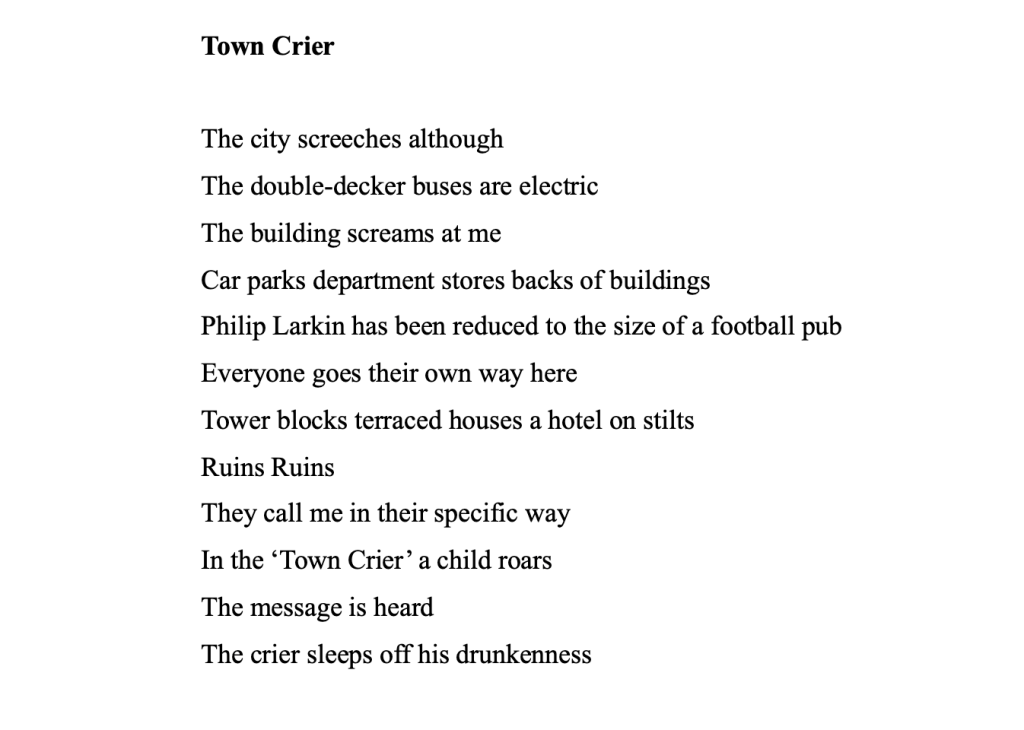
Ausrufer, Plärrer, Marktschreier would be words for a town crier in old German cities. And aren’t writers, poets, Poet Laureates in particular, to be considered as the silent town criers of our times, telling people the truth? When I went past a little theatre, I recognised a poster in the window, ‘This Poem Is For You’ by Andrea Mbarushimana. ‘I hope you have a good day’, it said to me. And this is what I mean. Writers usually don’t have loud voices. Their efforts are often located in the demolition zone. But there will be always something left. The message is heard. That’s worth it.
*
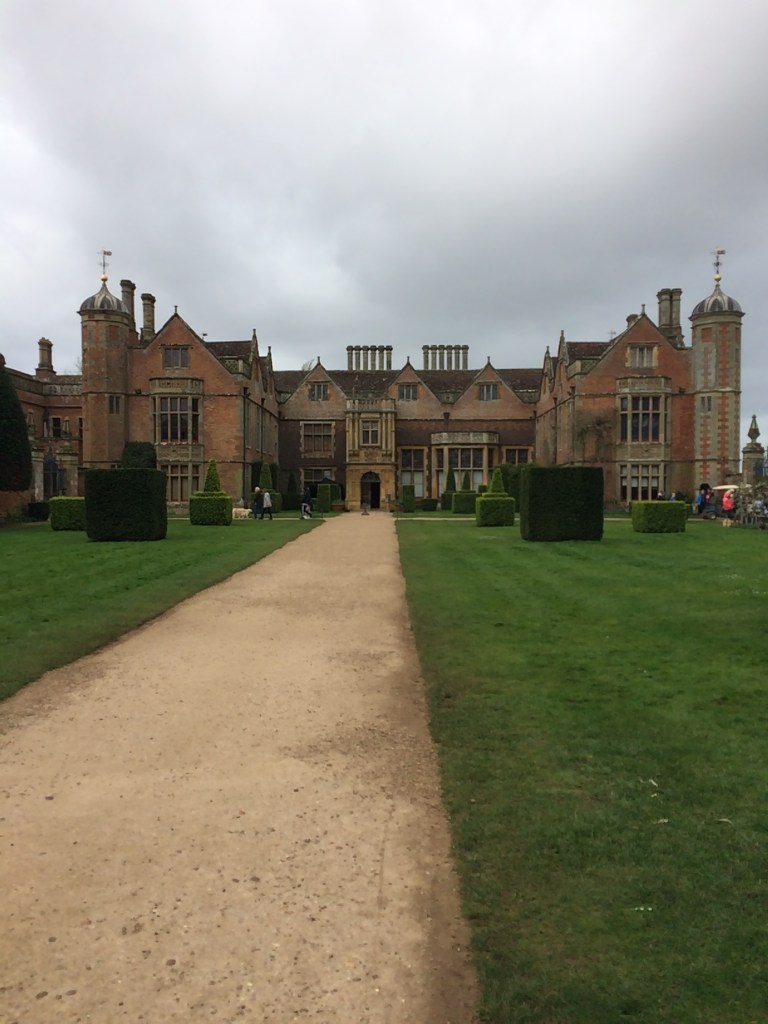
When I came home, Peter told me that he and Lynne had thought about taking me to Charlecote Park the next day. And it turned out to be a wonderful idea. I especially enjoyed going along the back roads on the countryside, having myself written a poem about them: ‘Detours that are shortcuts … / Shortcuts that are detours.’ We saw the giant semi-ruin of Warwick Castle from a bridge across river Avon, we visited Charlecote House and noticed the deer lying in the meadows. The weather was a bit like I remembered the description from my English textbook at school, but at least we managed to have a nice little outdoor lunch at the cafeteria. I was very grateful for this outing with my lovely hosts on my last day.
In the evening, I went with Monika and Nikolai to Twisted Barrel. Alan poured us another magic potion, and since it was actually his week-end off, we went with Jan and him to Triumph Brewhouse to have a last pint before I had to leave. Wasn’t it strange to think that I would take off in just a few hours and would be back in Dresden by noon the next day? ‘What do you think of your stay’ Monika asked, and although I had expected this question I’m still thinking of an answer. Perhaps it’s this text?
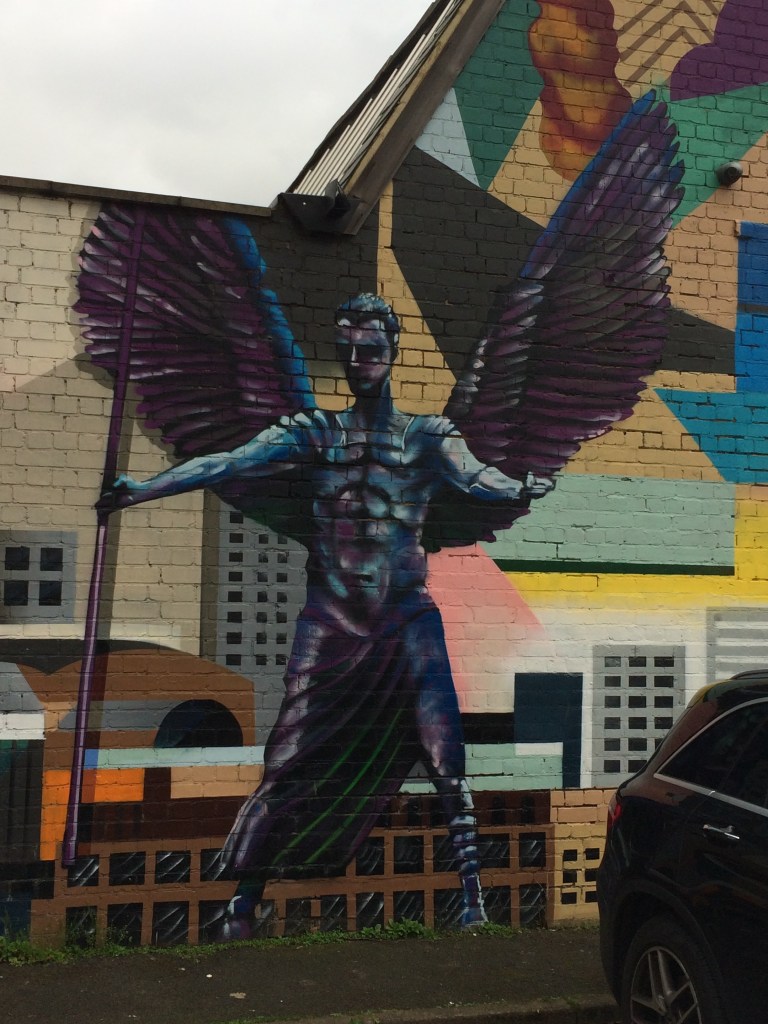
What I can say is that I had a great time in Coventry. The entire Writers’ Exchange is based on private initiative. I was overwhelmed by the friendliness of the people I met and the diversity of the city, in a good sense. I like the different faces of places, the visible fractures and frictions, and I would have liked to know more about the inner ones. That will happen some other time. It was the landlord who encouraged me to think of it. When he realised that I was a poet, he offered me a reading at Triumph Brewhouse on my next visit. I couldn’t believe it! That would never happen to me in Germany I told him. He was serious though. And as we were near the Ring Road, which occurs to me like the modern reconstruction of the city walls that were torn down in the 17th century, I promised myself to write a Shakespearean sonnet on it for this occasion.
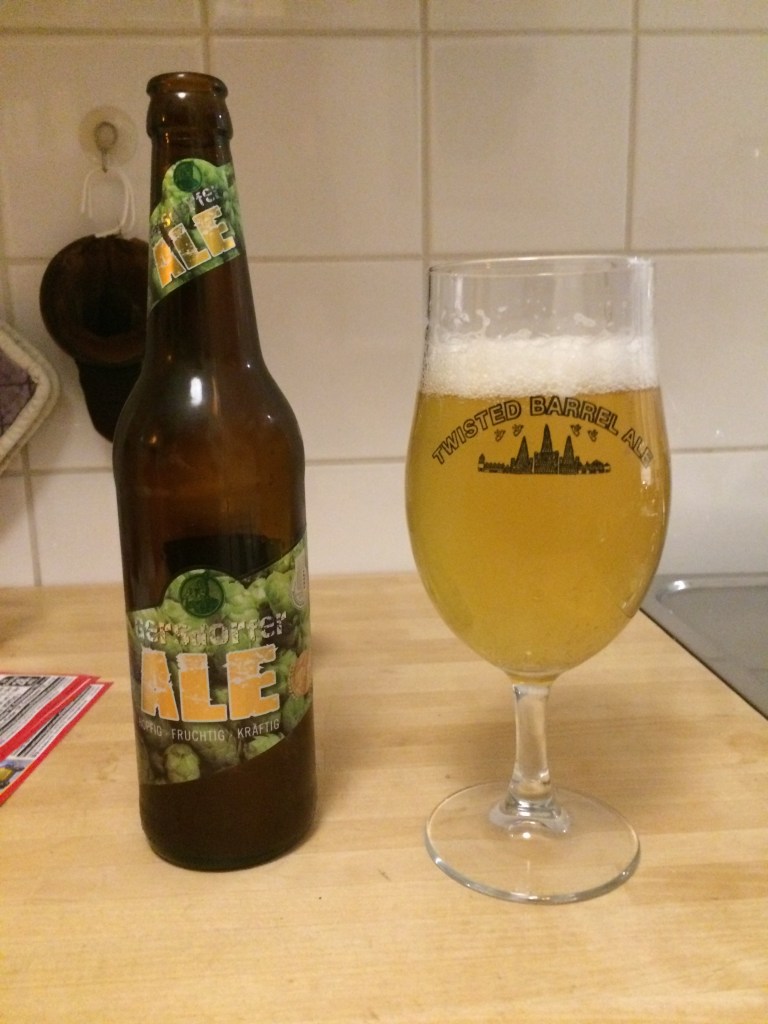
Alan gave me a beer glass of Twisted Barrel before they left. Shortly after, I had to bid farewell to Monika and Nikolai. Peter had agreed to bring me to Birmingham Airport although we had to leave at four o’clock in the morning. I was so delighted he did that! I still hope he wasn’t fined for dropping me at a stop point near the entrance where stopping, of course, was prohibited. Airborne once, my tiredness was wiped away. Dresden welcomed me with 25° Celsius, I sat down on a terrace at the Elbe in the afternoon and later poured a strong ale from Erzgebirge in Alan’s glass. I was home now. But there still is so much more to tell.
Dresden, April 2024
© Patrick Wilden
This post is written by Patrick and the photographs are his with the exception of 2, 9, 13 (Monika), 4 (HilzFM), 8 (Mandip Singh Seehra), 10 (Tracy Morris) and 13 (Zsofia Hacsek).
Patrick’s visit was supported by the city of Dresden.

 Coventry Association for International Friendship